The real cost of guessing
Before structured feedback, product decisions are expensive guesses. Teams ship features based on:
- The last customer complaint someone remembered in a meeting
- What the sales team thinks will close the next deal
- What sounded exciting in sprint planning last Tuesday
The result? Features that nobody uses. Sprint cycles that don't move the retention needle. Engineering hours absorbed into the graveyard of shipped-but-abandoned functionality.
The guessing game isn't just inefficient — it's compounding. Every wrong feature built is a right feature that didn't get built.
What structured feedback reveals
With MonkFeed embedded in your product, every user can submit and vote on ideas in real time — in the exact context where the need actually lives.
Instead of guessing, you see:
- Which features have the most demand across your user base
- Who is asking — free tier, paying, power user, recently churned
- How the need is described in users' own words, not filtered through support
- What workarounds users are already using — the strongest signal of all
- Sentiment over time — whether urgency is rising or fading
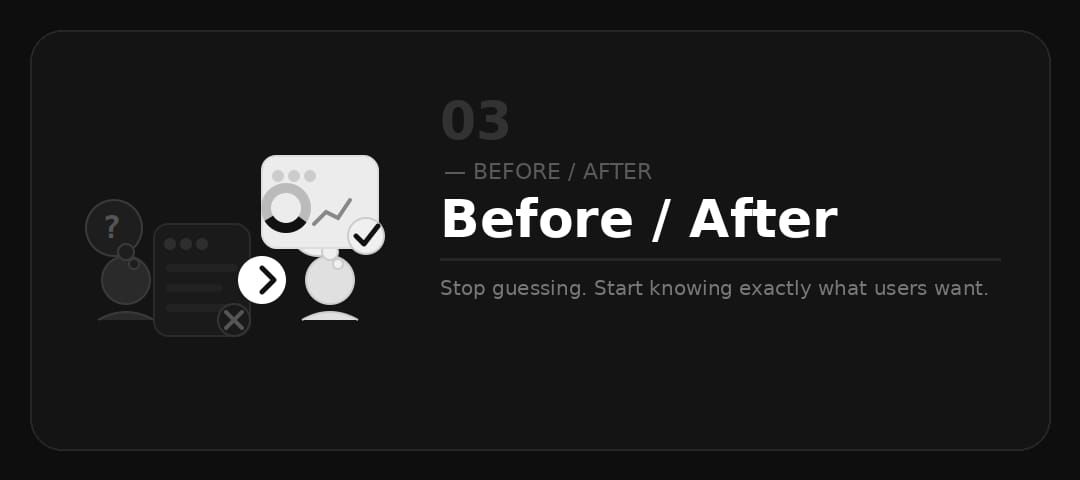
Before MonkFeed vs. After MonkFeed
Before:
- Roadmap built from memory and gut feel
- Loudest customer or biggest deal shapes the next sprint
- "Did we fix what users actually wanted?" gets answered after shipping — too late
- Churn happens for reasons you couldn't predict and didn't see coming
After:
- Roadmap backed by ranked, voted, segmented user demand
- Highest-impact requests surface automatically — no manual triage
- You know what users want before you start building
- Retention improves because you build what actually removes friction
The data-driven roadmap
MonkFeed's dashboard turns raw feedback into a ranked, filterable backlog. Sort by votes, filter by user segment, and track how sentiment shifts over time.
Every decision starts from real signal. Not a hunch, not a loudest-voice-in-the-room, not a sales promise made without engineering buy-in.
When you know exactly what your users need, building the right thing stops being lucky and starts being systematic.