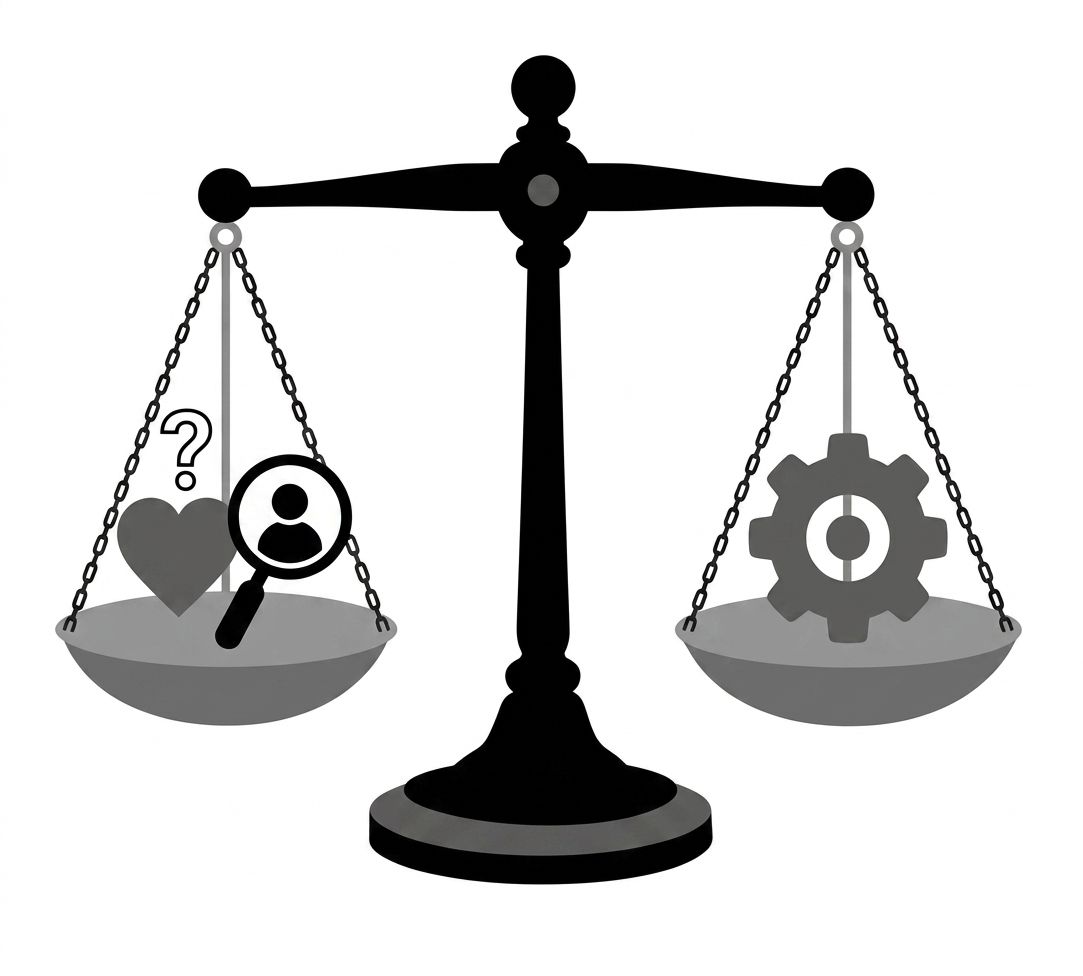
"Users are great at pointing out problems, but terrible at designing solutions."
Every product manager has been there. A customer emails in: "Add a dark mode!" or "Let me export to XML!" You build it, launch it, and crickets. Meanwhile, the feature that actually moves your churn metric sits on the roadmap, ignored.
The hard truth? Customers tell you what they think they want, not what they actually need.
Distinguishing between a loud feature request and a silent feature need is the single most critical skill in product strategy. If you build everything your users ask for, you'll end up with a bloated, unusable product that solves nothing.
Here is how to separate signals from noise and build products that users actually love.

The Trap of the "Loud Voice"
When feedback is unstructured, the loudest voices win. Usually, these are your power users who have developed workarounds for years. They know exactly what their specific workflow is missing — but they don't represent the silent majority.
If you listen only to explicit requests, you fall into three traps:
The Solution Bias Trap: Users suggest specific solutions (e.g., "Add a button here") rather than describing the underlying problem ("I can't find this data quickly"). You build the button, but the UX still feels clunky.
The Niche Feature Trap: You build a complex feature for 5% of your users — and make the interface more complicated for the other 95%.
The Churn Illusion: You think you're saving a customer by building their request, but you're just delaying the inevitable because you didn't solve their core workflow pain.
Key Insight: A request is a symptom. A need is the disease. Build for the disease.

How to Decode the Real Need
So how do you hear what they aren't saying? You need a system that filters noise before it hits your engineering team.
1. Ask "Why" Five Times
When a user asks for a feature, don't just say "Okay." Dig deeper.
- User: "I need a CSV export button."
- You: "What are you going to do with that data?"
- User: "I need to reconcile it with our legacy accounting system."
- You: "Ah. So the real need is automated accounting reconciliation — not just a CSV file."
The request was a CSV export. The need was integration. Solving the need might mean building an API integration, not a CSV button.

2. Look for Workarounds
Users are resourceful. If they are hacking together spreadsheets, sticky notes, or manual copy-pasting, that gap is a feature screaming louder than any email. If they haven't found a workaround yet, they might not even realize they have a problem.
3. Analyze Behavior, Not Just Words
What users do often contradicts what they say. If they claim they need more customization options but never use the settings menu you already built, they likely don't need more features — they need better defaults.
Behavioral data is the most honest feedback you'll ever get. It can't be exaggerated, misremembered, or politicized.
Why Voting is the Secret Weapon
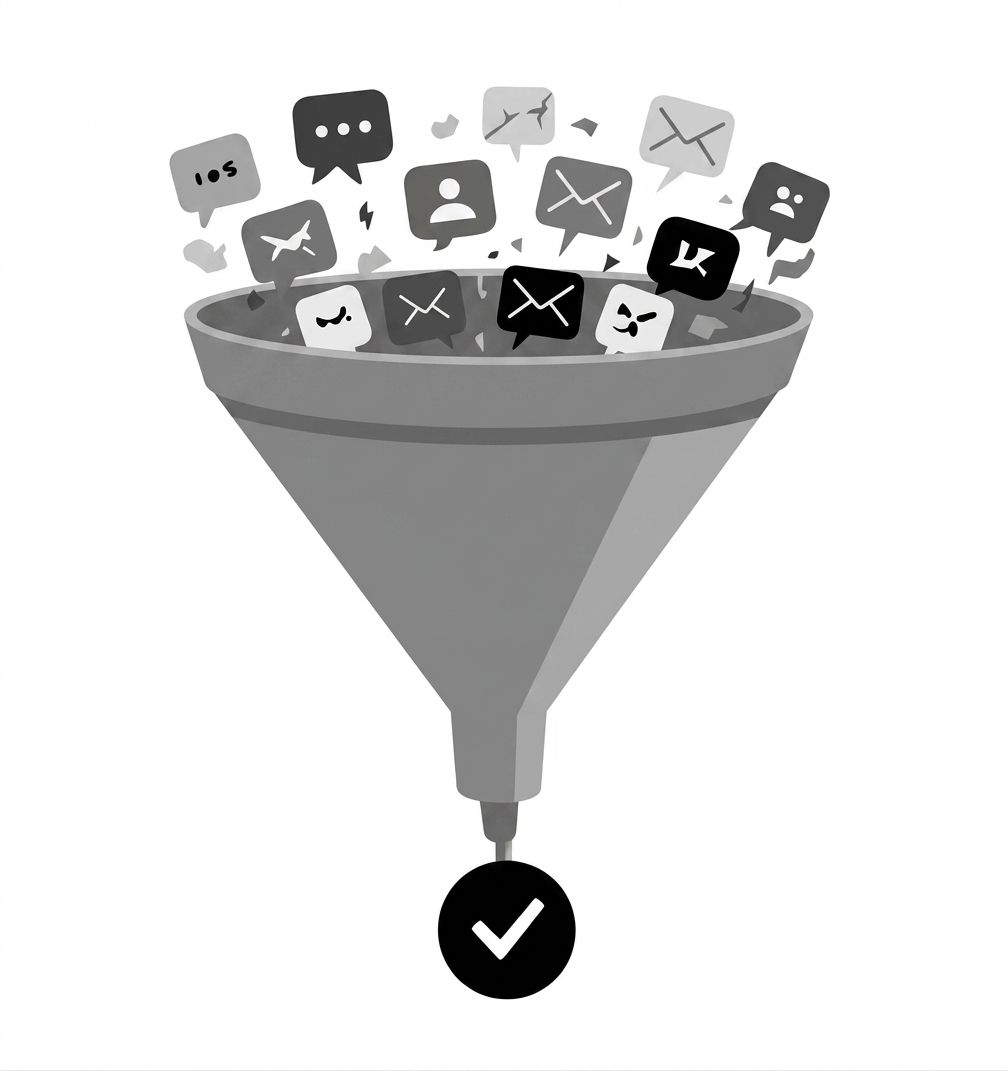
This is where most product teams fail. They collect feedback in a chaotic inbox, a jumbled Slack channel, or a support ticket system. The result? Feedback democracy turns into feedback anarchy.
You need a mechanism that forces users to prioritize for you.
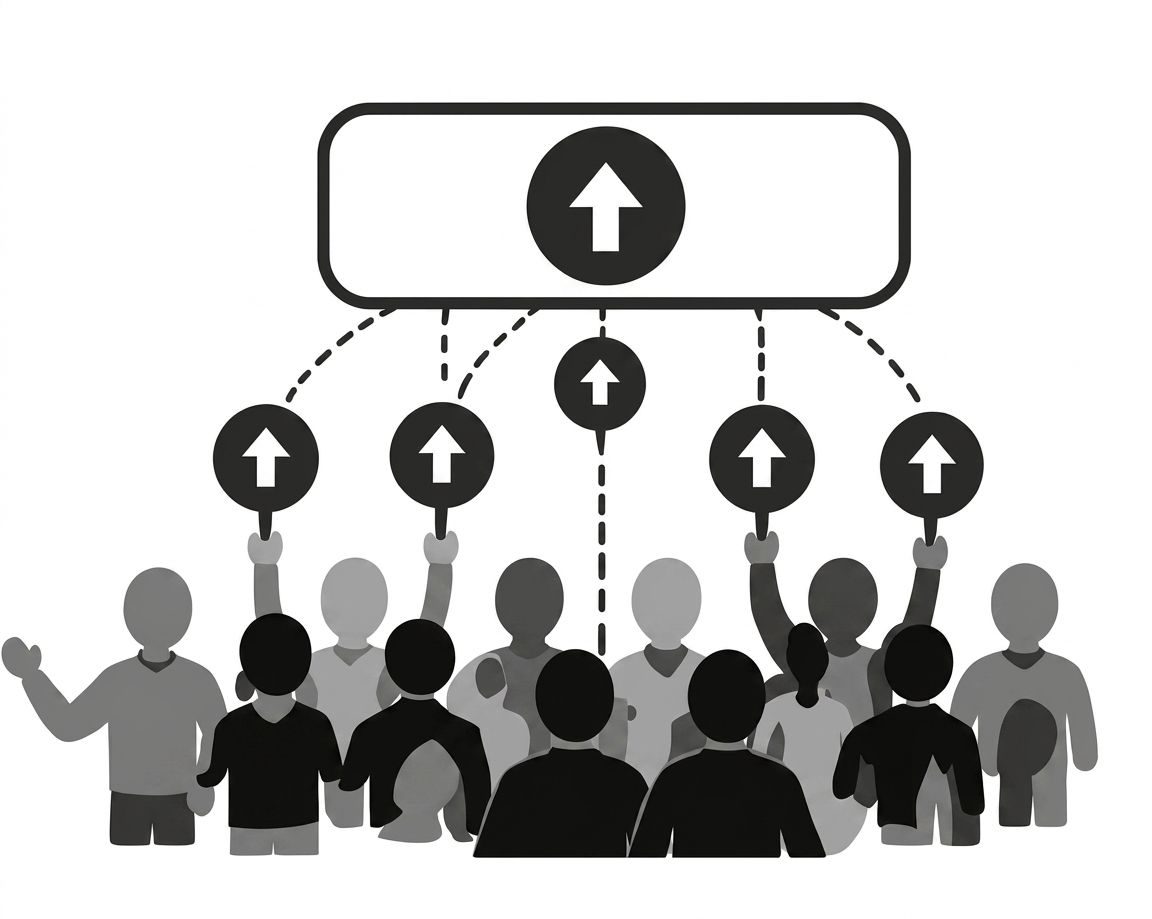
This is exactly why voting systems are non-negotiable for modern SaaS. When you move feedback from a "complaint box" to a public voting board, you change the dynamic:
- The Noise Dampener: A single user shouting for a niche feature gets one vote. If the feature is actually a real need, 50 other users will upvote it.
- The Reality Check: Users often realize, "Oh, I thought I wanted that, but nobody else cares. I'll stop complaining about it."
- The Data-Driven Roadmap: Instead of guessing which request is a "need," you let the market tell you. High-vote items are high-probability needs. Low-vote requests are just wants.
The MonkFeed Advantage: By centralizing feedback and enabling upvotes, you transform subjective complaints into objective data. You stop building for the loudest 1% and start building for the critical 50%.
A Simple Framework for Prioritization
Next time a feature request lands on your desk, run it through this filter:
| | Noise | Signal | |---|---|---| | Source | One vocal user or support ticket | Multiple users, high upvotes, or behavioral data | | Description | "Add X feature" | "I can't achieve Y goal without X workaround" | | Frequency | Rarely mentioned | Consistently mentioned across segments | | Impact | "Would be nice" | "Blocks critical workflow" or "Causes churn" | | Solution | Specific UI change | Underlying workflow or integration fix |
If it doesn't pass the "Signal" test, don't build it. Document it, acknowledge the user, and keep it in the backlog until the voting data proves it's a need.

Stop Guessing, Start Knowing
The path to a successful product isn't building everything your users ask for. It's building the right things.
By separating requests from needs, you protect your roadmap from scope creep and ensure your engineering hours are spent on features that drive retention — not just satisfaction.
And the best way to make that separation? Give your users a voice, but let the crowd decide.
MonkFeed helps you turn noisy feedback into a clear, data-driven roadmap. With built-in voting, status tracking, and discussion threads, you can finally distinguish what your users want from what they actually need.