Roadmaps that look great internally but miss the mark with users are one of the most expensive problems in product development. You spend a quarter building something polished, ship it, and hear nothing. Meanwhile, the feature that would have actually reduced churn is still sitting in a backlog column labeled "someday."
Modern product teams are moving away from "build and hope" toward "listen and validate." The shift isn't just philosophical — it's structural. It means changing where roadmap input comes from before a single line of code is written.
This guide walks you through exactly how to build a product roadmap co-created with your customers through structured feedback and data-driven prioritization.
Why Traditional Roadmaps Fail
The Inside-Out Trap
Most roadmaps are built inside-out: starting from what the team thinks users want, what competitors just shipped, or what the last big enterprise customer asked for. The result is a roadmap shaped by the loudest internal voices rather than real user demand.
This approach has three predictable failure modes:
- Assumption-driven building — features get scoped based on gut feel, not validated need
- Executive overrides — a single stakeholder's opinion can redirect an entire sprint
- Competitor mimicry — copying what others ship without knowing if your users actually want it
The Cost of Misalignment
The consequences aren't abstract. Misaligned roadmaps produce features nobody uses, engineering hours that don't move retention, and frustrated users who eventually churn.
Research from the Standish Group consistently finds that a large majority of product features see little to no regular use after shipping. That's not a quality problem — it's a listening problem. The engineering was fine. The roadmap input was wrong.
The Outside-In Roadmap Framework
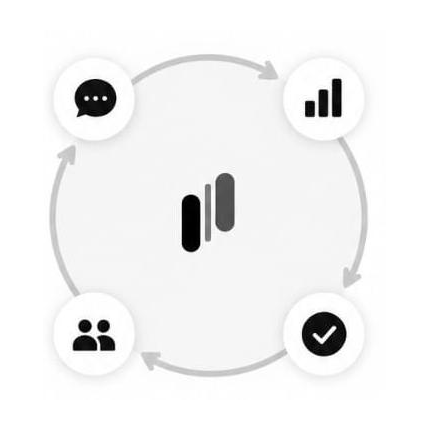
The outside-in framework flips the process. Instead of starting from internal ideas and testing them on users after shipping, you start from user signal and build only what has been validated.
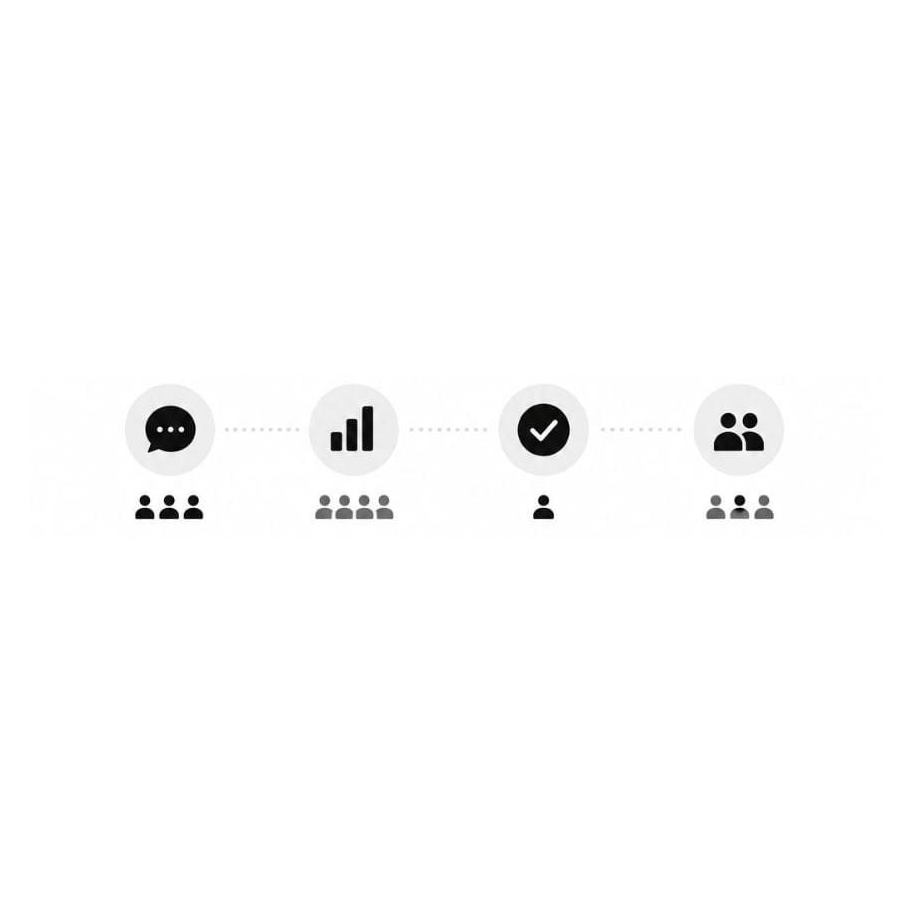
It has four stages — each one feeding directly into the next.
1. Collect Feedback Systematically
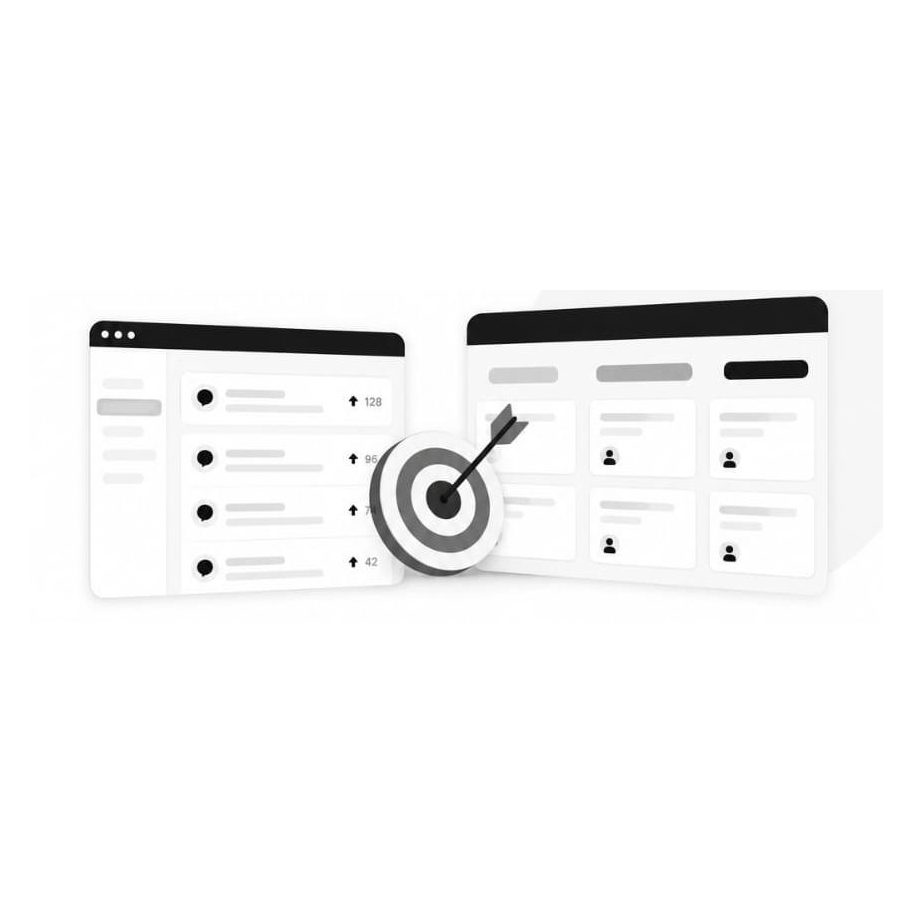
Ad hoc feedback — a support email here, a Slack message there — is noise, not signal. You need a system that consolidates input from every channel into one structured board.
Sources worth capturing:
- In-app feedback widget — the highest-quality signal because it's captured in context
- Support tickets — surface recurring friction patterns
- Sales calls — prospects tell you exactly what's blocking conversion
- Social channels — public sentiment and feature gaps competitors aren't covering
Tools like MonkFeed embed directly in your product, letting users submit and vote on ideas without leaving the page. Anonymous submissions are supported, which consistently increases honesty and volume — users share more candidly when they're not worried about being identified.
Pro tip: Anonymous feedback isn't less reliable — it's often more reliable. When users don't attach their name to a request, they describe the real pain instead of the polite version.
2. Prioritize with Data, Not Opinions
Once feedback is centralized, the next failure point is prioritization. Without a framework, the highest-voted item still might not be the right thing to build next.
The Impact vs. Effort matrix is the simplest reliable filter:
- High impact, low effort — build immediately
- High impact, high effort — schedule carefully, validate thoroughly
- Low impact, low effort — batch or deprioritize
- Low impact, high effort — remove from the roadmap entirely
Layer voting data on top of this matrix to remove subjectivity. MonkFeed automatically scores requests based on upvote count, user segment (free vs. paid, new vs. power user), and engagement depth. A feature requested by 50 paying users outweighs the same request from 200 trial accounts that never converted.
The result is a ranked backlog built on evidence — not the opinion of whoever spoke last in the planning meeting.
3. Validate Before You Build
Prioritization tells you what to consider. Validation tells you what to commit to.
Before engineering resources are allocated, test demand with low-cost signals:
- "Proposed" status — publish a feature idea on your feedback board and watch whether votes accelerate or stall
- Polls and prompts — ask your active users a single targeted question inside the product
- Early-access sign-ups — offer to notify users when a proposed feature ships; the sign-up rate is a demand proxy
This step exists to catch false positives — features that sound popular in discussion but don't have real pull-through demand. Teams that validate before building consistently reduce wasted sprints and improve the hit rate of features that actually move retention metrics.
4. Communicate Transparently
The final stage — and the one most teams skip — is publishing your roadmap and keeping it updated in real time.
Transparency has three compounding benefits:
- Builds trust — users who can see their request is "Under Review" stop emailing support to check on it
- Reduces noise — a visible roadmap cuts duplicate feature requests dramatically because users self-serve on status
- Creates advocates — customers who see their ideas move from Submitted to Shipped become vocal supporters
This doesn't mean sharing everything publicly. MonkFeed supports both public-facing boards and private internal views, so you control exactly what's visible to users vs. what stays internal.
The key is that something is visible — enough for users to know their input landed somewhere, not in a void.

Step-by-Step: Building Your Roadmap
Put the framework into practice with these five steps:
Step 1 — Audit Your Existing Feedback
Before setting up anything new, inventory what you already have. Pull requests from support tickets, Slack, email threads, and sales notes. Look for recurring themes. Identify the gaps — feedback that never gets captured at all.
Step 2 — Define Your Prioritization Criteria
Write down the factors that matter to your business: revenue impact, user segment size, alignment with your product vision, technical feasibility. These criteria become the filter every request passes through before it makes the roadmap.
Step 3 — Set Up Your Feedback Board
Configure MonkFeed's categories, tags, and automation rules to match how your team thinks about the product. Set up automatic notifications so the right team member gets pinged when a high-priority category receives a new submission.
Step 4 — Engage Your Community
Don't wait for feedback to come to you. Trigger in-app prompts after key user actions, include a feedback link in your onboarding flow, and mention the board in your product update emails. Active engagement produces 3–5x more submissions than a passive widget sitting in the corner.
Step 5 — Review and Iterate Monthly
Schedule a monthly roadmap review. Check vote trends — are any items accelerating? Re-score priorities against new data. Archive completed items and update statuses. A roadmap that isn't maintained is worse than no roadmap — it signals to users that nothing is being acted on.